The Key to Seamless Transitions Between Flooring Materials in Custom Homes
Custom homes in mountain communities like Vail often incorporate multiple flooring materials throughout the interior. It is common to see hardwood flooring flowing through living areas, tile installed in kitchens or bathrooms, and carpet used in bedrooms or lower-level spaces. When done correctly, these combinations create visual depth and functional separation. When done poorly, the transitions between materials can feel abrupt and poorly executed.
Achieving seamless transitions requires expert planning and professional hardwood flooring installation. The goal is to create smooth visual flow while maintaining structural precision and long-term durability. In custom home design, attention to detail at transition points significantly impacts the overall quality of the interior.
Why Flooring Transitions Matter in Custom Home Design
Flooring transitions occur wherever two different materials meet. These junctions are unavoidable in custom homes that use multiple surface types to define spaces. However, without careful execution, they can become visually disruptive.
Poorly planned transitions often result in uneven heights, visible gaps, or bulky transition strips that draw attention for the wrong reasons. A professional approach ensures that material changes feel intentional and refined.
Seamless transitions support smooth movement between rooms, maintain consistent elevation levels where possible, and preserve clean architectural lines. When designed properly, they enhance rather than interrupt the overall aesthetic.
Planning Flooring Layout Before Installation Begins
Strategic Space Planning for Natural Flow
Successful transitions begin long before installation starts. Proper planning ensures that flooring materials align with how each space functions within the home.
Designers evaluate traffic patterns, room purpose, and architectural layout to determine where material changes should occur. For example, hardwood flooring often flows through open living areas to maintain continuity, while tile may be placed in high-moisture zones such as kitchens or bathrooms.
Transition placement should feel natural rather than random. Positioning material changes at logical boundaries, such as between distinct rooms or under doorways, helps create a clean and organized appearance.
Aligning Transitions with Architectural Features
One of the most effective ways to create seamless transitions is by aligning them with structural elements.
Professional installers often place transitions directly beneath door frames or centered within doorways. When doors are closed, the material shift becomes visually hidden or less noticeable. This technique maintains separation between spaces without creating a distracting break in the flooring.
Transitions may also align with built-in cabinetry, hallway intersections, or natural room divisions. Careful measurement and layout marking ensure that the change in materials occurs exactly where intended. Precision is critical because even small misalignments become noticeable in high-end custom interiors.
Managing Height Differences Between Flooring Materials
Subfloor Preparation and Surface Leveling
Different flooring materials rarely share identical thicknesses. Hardwood planks, ceramic tile, and carpet systems each sit at slightly different heights. Without proper preparation, these differences create uneven surfaces or visible steps between rooms.
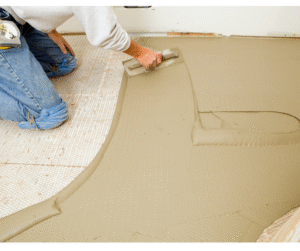
Professional installation begins with a thorough subfloor evaluation and leveling. This step reduces height discrepancies before any material is installed. Addressing these variations early prevents structural inconsistencies later.
When minor height differences remain after installation, subtle transition solutions are used to bridge the gap smoothly.
Custom Thresholds and Transition Solutions
Standard transition strips are sometimes sufficient, but custom homes often require more refined solutions. Custom thresholds, flush wood transitions, or low-profile transition profiles can create a cleaner look.
These solutions bridge material differences while preserving structural support and visual harmony. Instead of drawing attention to the change in flooring, they allow the materials to blend naturally while maintaining stability and durability.
Choosing Complementary Materials for Visual Harmony
Material selection directly influences how seamless transitions appear. Flooring combinations should complement each other in color, texture, and tone.
Warm hardwood finishes pair beautifully with neutral tile surfaces. Light wood planks combined with stone or matte porcelain create a modern aesthetic. Wide plank hardwood works well alongside large-format tiles, preserving proportional balance between materials.
When finishes share similar undertones or design language, the overall space feels unified. Thoughtful coordination ensures that transitions enhance architectural style rather than create visual conflict.
The Role of Professional Installation in Seamless Execution
Seamless transitions are not achieved solely through material choice. Precision craftsmanship determines whether the final result meets design expectations.
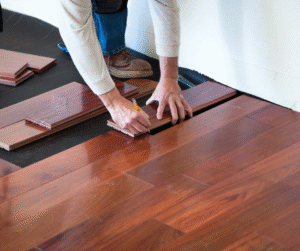
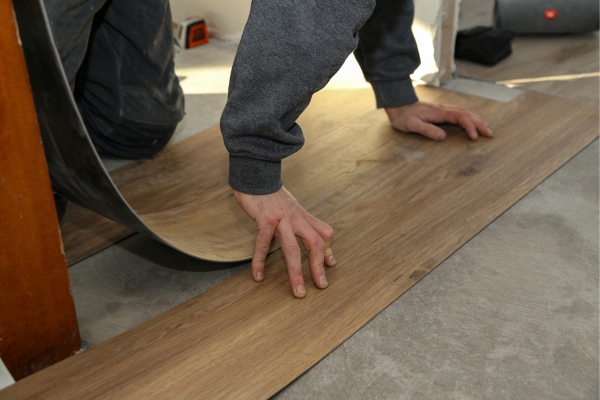
Professional hardwood flooring installation focuses on accurate layout planning, clean cutting around door frames and corners, proper placement of expansion gaps, and secure fastening methods. Each detail influences how smoothly materials meet.
Transition areas demand special attention because minor installation errors become highly visible. Skilled installers anticipate these challenges and execute transitions with accuracy and refinement.
Why Transitions Influence Property Value and Interior Quality
In custom homes, details define quality. Flooring transitions may seem like small components, but they significantly impact overall perception.
Well-executed transitions contribute to:
- A cohesive interior design that flows naturally
- Enhanced architectural sophistication
- Improved functional separation between spaces
- Increased property value through refined craftsmanship
Visitors and potential buyers may not immediately notice why a home feels polished, but seamless transitions often play a major role in creating that impression.