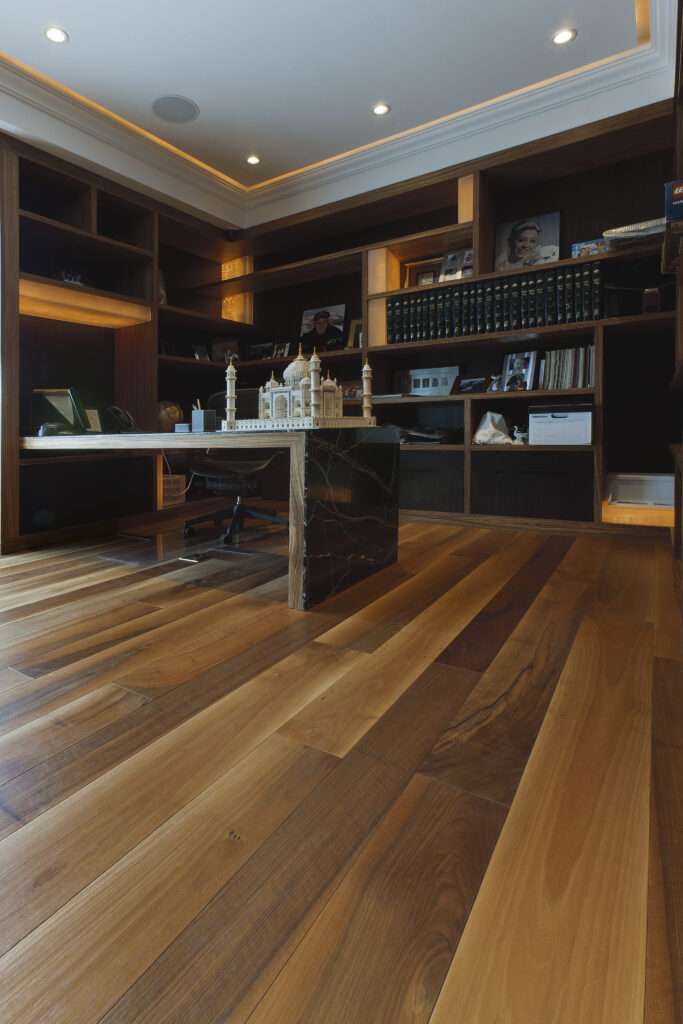
At sea level, choosing between engineered and solid hardwood is mostly a matter of preference. At 8,000 feet in the Vail Valley, it’s a matter of expertise — and getting it wrong is an expensive mistake.
Your home in the Vail Valley isn’t just a home. It’s a structure that endures some of the most extreme humidity swings in North America.
Winter indoor humidity can drop below 15%. Summer monsoons push it past 55%. Radiant heat systems cycle on and off under your subfloor. UV exposure at altitude is 25% more intense than sea level.
Wood is a living material. It moves — it expands when it absorbs moisture and contracts when it dries out. In this valley, that cycle happens harder and faster than almost anywhere else in the country.
Most flooring companies don’t think about any of this. We’ve spent 20 years studying it.
Engineered hardwood’s cross-laminated construction is designed specifically to handle this kind of movement. Multiple layers of wood run in opposing directions, working together to resist the expansion and contraction that would stress a solid plank.
For most Vail Valley homes — especially those with:
…engineered is the smart call. It moves with your home instead of against it.
Here’s something most flooring companies won’t tell you: we’ll push solid wood when the environment is right for it.
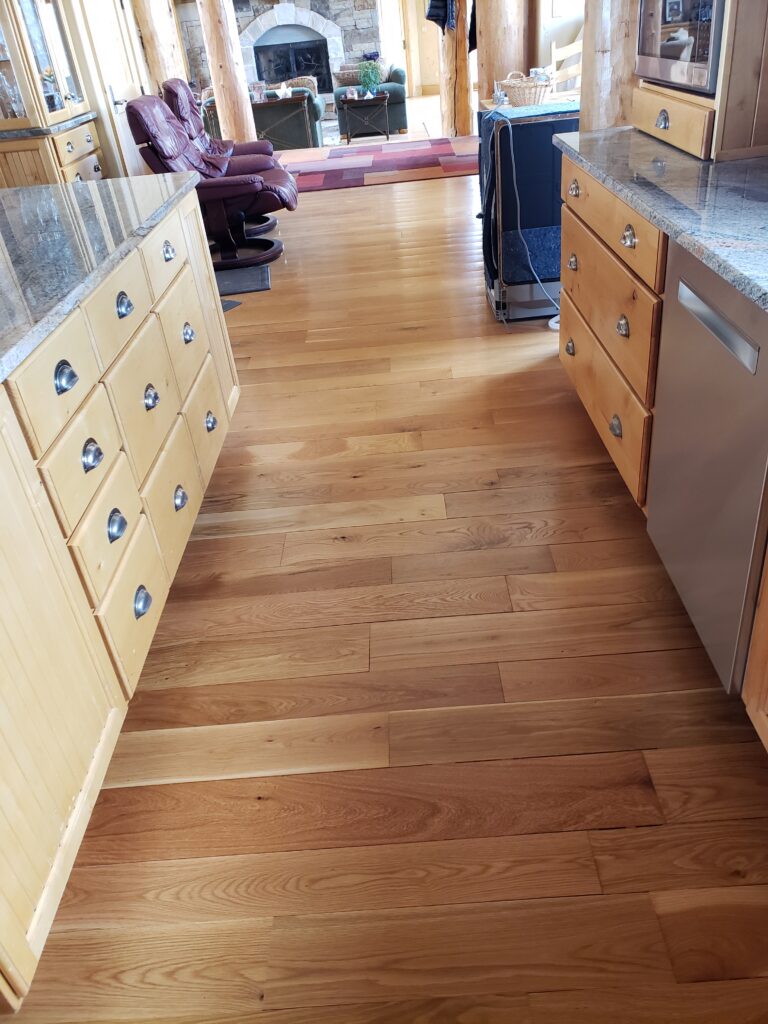
Solid hardwood is the real deal. No beveled edges. Custom finished to any color you want. Smooth, seamless, and built to last generations. When conditions allow for it, there’s nothing quite like a wide-plank solid white oak floor custom finished on site.
So when does solid make sense here? Brian looks for a very specific set of conditions:
“If I know it’s not going to have a lot of environmental changes and it’s an easy environment — I’m going to push a solid wood floor. That’s just the old school, nice, good-looking floor.”
— Brian Carey, Vail Valley Hardwoods
The Altitude-Engineered System isn’t just about choosing the right product. It’s about the full picture:
subfloor condition, moisture levels, radiant heat evaluation
occupancy patterns, humidity expectations, temperature swings
Engineered vs. solid, species selection, finish type
Every floor is acclimated to your specific environment before installation
Every job follows National Wood Flooring Association standards
We read every manufacturer's installation instructions. Every time.
This is where experience isn’t just a nice-to-have — it’s protection against a very costly mistake.
We’ve seen it firsthand. A homeowner hires someone who says they can install hardwood. They skip reading the manufacturer’s installation instructions. They don’t check subfloor moisture levels, humidification requirements, or adhesive compatibility. And the floor — sometimes thousands of square feet of it — buckles, delaminates, or face-checks.
It doesn’t take years to see the damage. Sometimes it happens within months.
There’s a right way and a wrong way to install a hardwood floor. The National Wood Flooring Association (NWFA) publishes installation standards that every professional should follow. In our 20+ years in this valley, we’ve seen firsthand how many contractors don’t — and we’re often the ones called in to fix it.
Before we ever deliver a floor to a job site, there’s a checklist. Subfloor condition. Moisture readings. Acclimation plan. Adhesive selection. Manufacturer requirements. Environmental conditions. Every single time.
“Everyone thinks they can install a floor. They think it’s easy — but it isn’t. There are a lot of parameters involved, a lot of checklists that need to take place before you’re even delivering a floor to a job site.”
— Brian Carey, Vail Valley Hardwoods
At 8,000 feet, humidity swings between 15% in winter and 55% in summer are normal. Engineered hardwood’s cross-laminated construction moves with these changes instead of against them, reducing the risk of gapping, cupping, and cracking that plagues solid wood in our climate.
Absolutely. If your home has a stable environment — forced air heat (not radiant), consistent occupancy, no crawl space below, and a dry, solid subfloor — we’ll recommend solid. It’s a beautiful, long-lasting floor when conditions allow for it.
We’ve seen floors delaminate, face-check, and buckle within months of installation when the wrong product was chosen for the environment. It’s an expensive mistake that often requires a full replacement.
We evaluate every project individually. We look at your subfloor type, heating system, occupancy patterns, and humidity expectations before making a recommendation.
Not necessarily. Today’s engineered hardwood is engineered for strength. The key is choosing the right construction type and wear layer thickness for your specific situation.
Every floor we install is acclimated to your specific environment before installation. In Miami, we’re bringing wood up to 33% moisture. Here, we’re bringing it down to 8–12%. Same product, completely different protocol.
In the Vail Valley, the difference between a floor that lasts 30 years and one that fails in 30 months often comes down to one thing: who installed it and whether they knew what they were doing.
We do. And we’ll tell you honestly which direction to go before you spend a dollar.