What Can Actually Be Saved After a Burst Pipe Damages Hardwood Floors in Vail Valley
A burst pipe in a Vail Valley home is a homeowner’s nightmare. Water floods across hardwood floors, soaks into joints, warps planks, and raises every question at once. Is the floor ruined? Can any of it be saved? How fast do you need to act? How much will this cost?
The answers depend on variables that only a careful inspection can determine. But the good news is that many water-damaged hardwood floors can be partially or fully saved. Understanding what determines salvageability helps homeowners make informed decisions during an extremely stressful time.
Why Burst Pipes Are So Common in Vail Valley
Mountain homes are especially vulnerable to pipe failures. Winter temperatures drop well below freezing for extended periods. Many homes sit vacant during parts of the year, which means heating systems may cycle at lower temperatures. Pipes in exterior walls, crawl spaces, and unheated areas are at constant risk.
When a pipe bursts in an occupied home, the water is discovered quickly. When it bursts in a vacant home, the water may sit for days or weeks before anyone notices. That time difference is often the difference between a repair and a full replacement.
The First 24 to 48 Hours Are Critical
The single most important factor in saving a water-damaged hardwood floor is how quickly the water is removed and drying begins.
Immediate Water Extraction
Standing water must be removed as quickly as possible. Every hour that water sits on hardwood increases the depth of penetration into the wood, subfloor, and potentially the structure below.
Professional Drying Equipment
Fans, dehumidifiers, and specialized drying mats pull moisture from the wood and subfloor. This process must begin quickly and continue until moisture readings return to acceptable levels.
Do Not Walk on Saturated Floors
Foot traffic on waterlogged hardwood crushes softened wood fibers and creates permanent damage that would not have occurred if the floor had been left alone to dry.
How Professionals Assess What Can Be Saved
Once emergency drying is complete, a thorough assessment determines the extent of damage and the options available.
Moisture Meter Readings
A professional uses pin or pinless moisture meters to map the moisture content across the entire affected area and beyond. This reveals whether moisture has traveled further than the visible damage suggests.
Cupping vs Crowning vs Buckling
Different types of warping indicate different levels of damage. Mild cupping (where board edges are higher than centers) often resolves as the floor dries. Severe buckling (where boards lift off the subfloor entirely) typically indicates irreversible structural change.
Subfloor Condition
The subfloor beneath the hardwood must also be evaluated. If the plywood or OSB has delaminated or developed mold, it must be replaced regardless of the hardwood condition above it.
What Can Typically Be Saved
In many burst pipe situations, a significant portion of the floor can be preserved.
Floors That Dried Quickly
Hardwood that was exposed to water for less than 24 hours and dried professionally often recovers fully. Minor cupping relaxes as moisture equalizes. The floor can then be sanded and refinished to restore its appearance.
Peripheral Areas Away From the Source
Water damage is usually worst at the source and diminishes outward. Areas on the edges of the flood zone often have minimal damage that resolves with drying alone.
Engineered Hardwood vs Solid
Engineered floors sometimes tolerate brief water exposure better than solid because their cross-laminated construction resists warping. However, if water penetrates the veneer layer and reaches the plywood core, delamination can occur.
What Usually Cannot Be Saved
Some damage is beyond repair, and recognizing it early prevents wasted time and money.
Prolonged Saturation
Floors that sat in standing water for days or weeks typically suffer irreversible cell damage. The wood fibers break down permanently, and no amount of drying will restore structural integrity.
Mold Contamination
If mold has developed on or beneath the hardwood, affected sections must be removed for health reasons. Mold remediation takes priority over floor preservation.
Severe Buckling With Subfloor Damage
When boards have buckled significantly, and the subfloor beneath has failed, the affected area requires removal, subfloor replacement, and new hardwood installation.
The Repair Process for Salvageable Floors
When assessment confirms that the floor can be saved, the repair process follows a careful sequence.
Controlled Drying to Target Moisture Levels
Drying continues until the hardwood reaches the moisture content range appropriate for Vail Valley’s altitude and climate. Rushing this step leads to problems after refinishing.
Board Replacement Where Needed
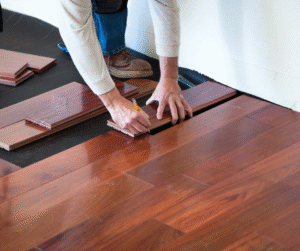
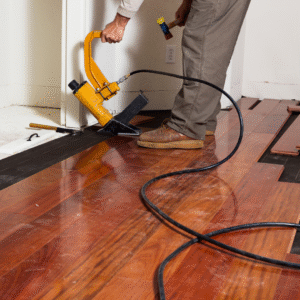
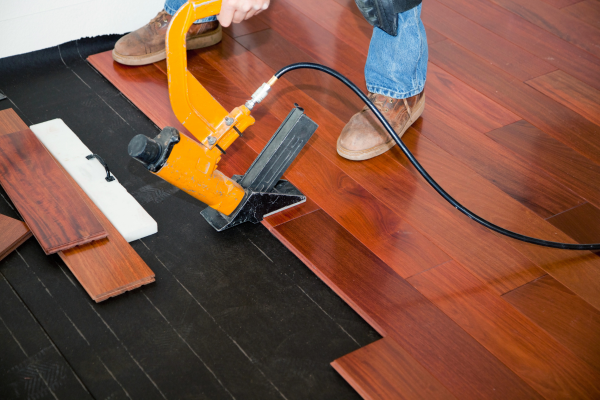
Damaged sections are carefully removed and replaced with matching species, grain, and width. A skilled installer makes these replacements invisible in the finished floor.
Full Sand and Refinish
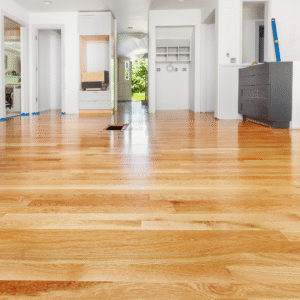
Once repairs are complete and moisture is equalized, the entire affected area is sanded and refinished to create a uniform appearance. This blends repairs seamlessly with the surrounding floor.
Act Quickly and Assess Honestly
The most important thing any Vail Valley homeowner can do after a burst pipe is act immediately on water removal and resist the urge to assume everything is ruined. Professional assessment often reveals that more floor can be saved than homeowners expect, but only if drying begins fast enough to preserve that option.