How to Choose Flooring for a Vail Valley Home with Radiant Heat
Radiant heat is one of the quietest comforts a mountain home can offer. Warmth rises evenly through the floor with no vents, no drafts, and no noise, which is exactly what you want after a day on the hill. But up here the flooring decision is harder than it looks. At 8,000 feet, your floor has to move that warmth into the room and stay stable through humidity that swings from bone dry in January to damp in the summer monsoons. Choose well and the room feels effortless. Choose poorly and you’re left with a cold room, or boards that slowly cup and gap. Here’s how to choose with confidence.
Why Flooring Choice Matters More With Radiant Heat
With a radiant system, your floor isn’t just something you walk on. It’s part of the heating system itself. Warmth has to pass up through the flooring before it reaches the room, so the material you choose shapes how comfortable the space feels, how efficiently the system runs, and how much you pay to heat it through a long Colorado winter.
The Two Jobs Your Floor Has to Do at Once
A floor over radiant heat is asked to do two things at once. It has to conduct heat well, and it has to hold its shape through constant temperature changes. Materials that resist heat force the system to work harder, and materials that move too much can warp, crack, or pull apart at the seams. In the Vail Valley, where the system cycles daily and the air is dry, that second job matters even more than it does at sea level.
Electric vs. Hydronic Systems
Radiant heat comes in two forms. Electric systems warm the floor through heating cables or mats, while hydronic systems circulate warm water through tubing underneath. Both give the same gentle, even heat, but they warm up and install a little differently. Knowing which one your home uses helps you rule out the wrong materials early.
What Makes a Floor Radiant-Heat Friendly at Altitude
Before comparing products, understand the two qualities that drive the decision.
How Quickly a Floor Warms Up
Some materials pass heat to the surface readily, and others hold it back. Dense floors like tile and stone warm quickly, so the room responds soon after the system kicks on. Thicker or more insulating materials take longer and can soften the output. As a rule, a thinner, denser floor reacts faster and runs more efficiently.
How Well It Holds Its Shape
This is where mountain homes are different. Winter humidity in the valley can drop below 15%, then climb past 50% in summer, and every time the system cycles the floor expands and contracts on top of that. Materials that stay stable through those swings keep their shape and tight seams for decades. Those that don’t develop gaps, cupping, or squeaks. This single quality separates a floor that ages gracefully at altitude from one that slowly gives you trouble.
The Best Flooring Materials for Radiant Heat
A few materials consistently do well when paired with a radiant system.
Tile and Natural Stone
Ceramic, porcelain, slate, and other stone tiles are the standard for a reason. They carry heat beautifully, warm fast, and hold that warmth long after the system cycles off. That makes them a natural fit for mudrooms, bathrooms, and kitchens, where warm floors underfoot are the whole point after a snowy morning.
Engineered Hardwood
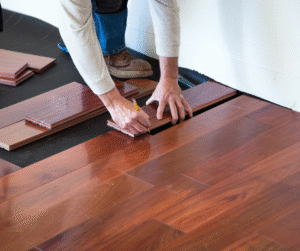
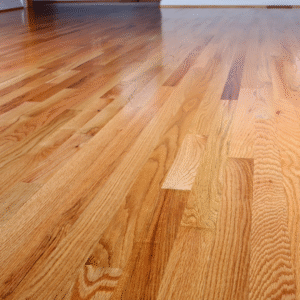
If you want the warmth and character of real wood, engineered hardwood is usually the answer in the high country. Its cross-layered core resists the swelling and shrinking that trouble natural wood, so it stays far more settled over radiant heat and through our humidity swings than solid planks do. If you’re weighing wood options, our look at engineered wood flooring and the differences between engineered and solid hardwood at altitude is a good starting point.
Luxury Vinyl and Laminate
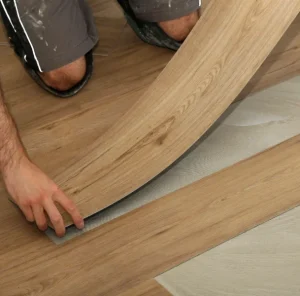
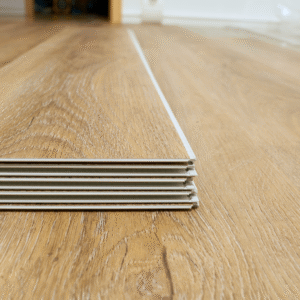
Rigid-core luxury vinyl is one of the simplest choices to feel good about here. It’s stable, waterproof, and comfortable to stand on, which makes it popular in rentals, mudrooms, and busy family spaces across the valley. Quality laminate can work too, as long as it’s rated for radiant use. Just confirm the product is approved for heat, since not every vinyl or laminate is built to sit above a warm floor. Luxury vinyl plank is often a comfortable fit for moisture-prone rooms.
Flooring Choices That Call for Extra Caution
A few materials can still work, but only with careful planning, and a couple are usually better avoided.
Solid Hardwood Over Radiant Heat
Solid wood makes a gorgeous floor, but it moves a lot with heat and humidity, and our climate delivers both in extremes. Over a radiant system at altitude, that movement often shows up as gapping, cupping, or cracking, which is why many manufacturers won’t warranty solid wood over radiant heat at all. When someone loves the look of wood, choosing the right wood species in an engineered form almost always leaves them happier down the road.
Carpet and Thick Padding
Carpet isn’t completely off the table, but thick, high-pile carpet and heavy padding act like a blanket over the system, trapping warmth below the surface. If you want carpet in a bedroom, keep both the carpet and the pad thin so the heat can reach the room.
Matching Flooring to Your Vail Valley Home
Room and Climate Considerations
Tile earns its keep in mudrooms, bathrooms, and kitchens, while engineered wood suits living rooms and bedrooms where comfort matters most. Our climate is the deciding factor for many homes here. The wide humidity swings between dry winters and damp summers put real stress on any wood floor, which makes stable, engineered options especially worthwhile from Eagle to Vail Village.
Temperature Limits That Protect Your Floor
Most wood and resilient floors are happiest at or below roughly 80°F at the surface. Staying within your manufacturer’s range, letting the material acclimate to your home before install, and leaning on experienced local installation all protect the floor and its warranty at once. A radiant-compatible flooring installation done properly is what lets these materials last through mountain winters.
Choosing With Confidence
It comes down to two questions. Does the material carry heat well, and does it stay put while it does? Lead with those, match your choice to your rooms and our mountain climate, and check everything against the manufacturer’s guidelines. Do that, and your floors will feel as good as they look: warm, even, and built to last at altitude.