Engineered vs. Solid Hardwood at Altitude: The Definitive Guide
At sea level, choosing between engineered and solid hardwood is mostly a matter of taste. You pick the look you love, and either one will likely serve you well. At 8,000 feet in the Vail Valley, the decision is different. Here it is a matter of expertise, and getting it wrong is the kind of mistake that shows up as buckled, delaminated, or cracked boards a few months after installation. This guide walks through how the two floors actually behave in a high-altitude home, when each one is the right call, and why the product you choose matters far less than most people think compared to how it is installed.
Why Altitude Changes the Entire Conversation
Wood is a living material even after it is milled. It absorbs moisture from the air and swells, then releases it and shrinks. That movement is normal everywhere. What makes the mountains unusual is how hard and how fast the cycle happens. It is the core reason we built The Elevation Standard around this climate in the first place.
The Humidity Swing Most Homeowners Never See Coming
In a typical Vail Valley home, indoor humidity can fall below 15 percent in the dead of winter, then climb past 55 percent during the summer monsoon season. That is one of the most extreme indoor humidity ranges in North America, and your floor lives through it every single year. A plank that is comfortable in July can be under real stress by January. The wider and faster that swing, the more a floor is asked to expand and contract, and the more likely a poorly matched product is to gap, cup, or crack.
Radiant Heat, UV, and the Stress You Cannot Feel
Humidity is only part of it. Radiant heat systems cycle on and off beneath the subfloor, warming and drying the wood from below on a daily rhythm. Many mountain homes are second homes, so the heat gets cranked up for a visit and turned down again when everyone leaves, which repeats that expansion and contraction over and over. On top of all that, UV exposure at altitude runs about 25 percent stronger than at sea level, which accelerates how finishes and colors age. None of this is visible day to day, but your floor feels every bit of it.
How Engineered and Solid Hardwood Actually Differ
The names can be misleading. Engineered hardwood is still real wood on top. The difference is what sits underneath.
Engineered: Built to Move With the Mountain
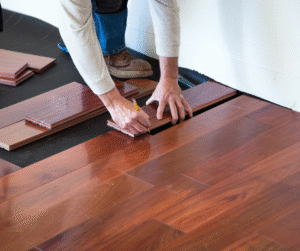
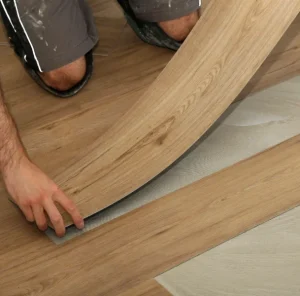
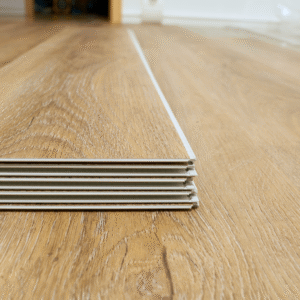
Engineered hardwood is made from multiple layers of wood bonded together with the grain running in opposing directions. That cross-laminated construction is the whole point. When humidity changes, the layers pull against one another and hold the plank stable instead of letting it swell or shrink freely. In a climate defined by big, frequent moisture swings, that stability is not a marketing feature. It is the reason the floor stays flat. Modern engineered wood flooring installation also delivers genuine strength, and the real decisions are the construction type and the thickness of the wear layer on top, which determines how the floor can be refinished later.
Solid: The Traditional Floor, and When It Still Wins
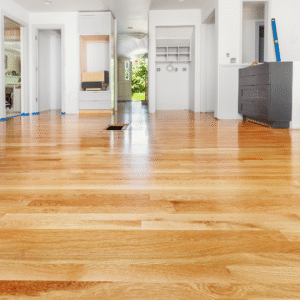
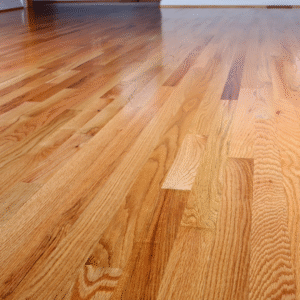
Solid hardwood is exactly what it sounds like, a single piece of wood all the way through. It is the classic floor: no beveled edges, finished on site to any color you want, smooth and seamless, and capable of lasting for generations. When the environment cooperates, there is genuinely nothing quite like a wide-plank solid white oak floor finished in place. The catch is that a solid plank moves as one piece, with nothing to counteract that movement, which is precisely what makes it demanding in a climate like this one.
Making the Call for Your Home
The honest answer is that neither floor is universally better. The right choice depends on the conditions inside your specific home, and on the right species selection for how that home is lived in.
The Case for Engineered in the Vail Valley
For most homes in the valley, engineered is the smart call. It is especially well suited to houses with radiant heat cycling on and off, part-time or vacation occupancy where the temperature gets pushed up and down, crawl spaces below that turn cold at night, and significant temperature differences between floors. In all of those situations, engineered hardwood moves with the home rather than fighting it, and that is what keeps it looking right year after year.
The Conditions Where Solid Still Belongs
Plenty of flooring companies will steer every customer toward whatever is easiest to sell. We will recommend solid wood when the environment is genuinely right for it. That means a stable, controlled setting: forced-air heat with consistent humidity rather than radiant, a main-level installation with dry carpeted space below to buffer temperature swings, a flat and solid subfloor with no moisture concerns, and a home that is lived in consistently so conditions do not swing dramatically. It also means a homeowner who values the traditional look and longevity enough to stay on top of the maintenance that comes with it. As Brian Carey, who leads our crew, puts it, when he knows a home is a stable, easy environment, he will happily push a classic solid floor, because there is nothing better looking when the setting allows for it.
The Part Nobody Talks About: Installation and Acclimation
Here is the truth that gets lost in every engineered-versus-solid debate: the product matters less than the installation. A perfect floor installed carelessly will fail, and a well-matched floor installed properly will last for decades.
Acclimation Is Not Optional at 8,000 Feet
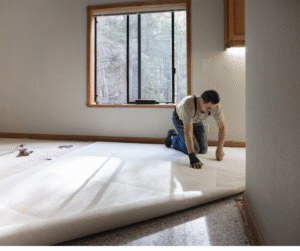
Before a single board goes down, the wood has to be brought into balance with the environment it will live in. This is where altitude changes the protocol entirely. The very same product acclimated for a home in Miami might be brought up to around 33 percent moisture, while here in the mountains it needs to come down to roughly 8 to 12 percent. Same box of flooring, completely different preparation. Skipping this step, or guessing at it, is one of the most common reasons floors fail up here.
What Happens When It Is Done Wrong
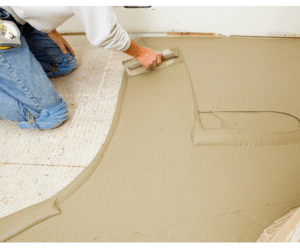
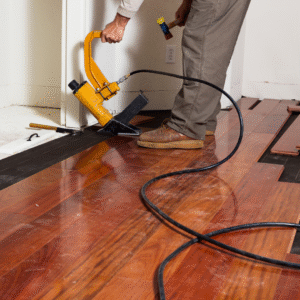
We have been called in to fix the aftermath more times than we can count. A homeowner hires someone who says they can install hardwood. They skip the manufacturer’s instructions, ignore subfloor moisture readings, and pay no attention to acclimation or adhesive compatibility. Within months, sometimes thousands of square feet of floor buckles, delaminates, or face-checks, and the repair often means a full replacement. The National Wood Flooring Association publishes installation standards that every professional should follow, covering subfloor condition, moisture readings, acclimation, adhesive selection, and manufacturer requirements. Following that checklist every single time is the difference between a floor that lasts 30 years and one that fails in 30 months. These are the same avoidable errors we cover in the worst flooring mistakes we see in Vail Valley homes.
So Which One Should You Choose?
If your home has radiant heat, sees inconsistent occupancy, or lives through the full swing of mountain humidity, engineered hardwood is almost always the wiser investment. If you have a stable, consistently occupied home with forced-air heat and a dry, solid subfloor, solid hardwood can reward you with a floor that feels timeless and lasts a lifetime. Either way, the product is only half the decision. The other half is whether the people installing it understand what your floor is up against at altitude. If you want an honest read on your specific home before you spend a dollar, tell us about your project.