What Hotels, Restaurants, and Retail Spaces Need to Know Before Installing Commercial Hardwood in Eagle County
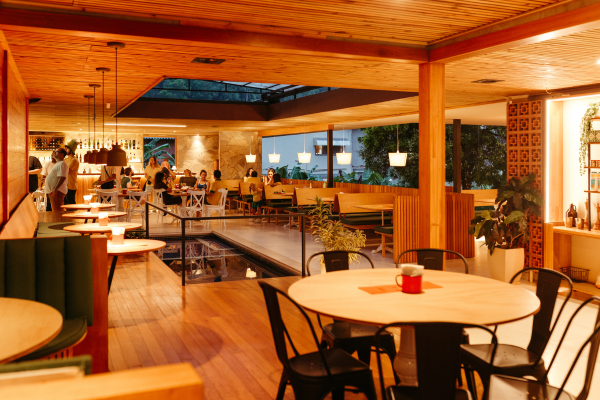
Commercial spaces in Eagle County face flooring demands that residential homes never encounter. Hotels welcome hundreds of guests per week. Restaurants endure spills, dropped plates, and dragged chairs every service. Retail stores absorb foot traffic from ski boots, strollers, and shopping carts all day long.
Hardwood flooring can work beautifully in all of these environments, but only when the right species, construction, and finish are chosen for the specific application. Understanding what commercial hardwood requires before installation begins prevents the expensive failures that happen when residential thinking is applied to commercial spaces.
Why Commercial Flooring Is Fundamentally Different
A residential floor sees one family’s daily use. A commercial floor sees dozens or hundreds of people every day, often wearing shoes that would never be worn inside a home. The volume, intensity, and unpredictability of commercial traffic change everything about how the floor must be specified.
Traffic Volume and Wear Patterns
Commercial spaces develop wear patterns quickly. Entryways, checkout areas, hallways, and high-traffic lanes take concentrated abuse. The floor must handle this without showing premature wear that makes the space look tired.
Moisture and Spill Exposure
Restaurants and hotel lobbies deal with constant moisture from drinks, cleaning chemicals, tracked-in snow, and wet shoes. The floor and its finish must resist this moisture without degrading.
Maintenance Limitations
Commercial spaces cannot shut down for floor maintenance the way a homeowner can leave for a weekend during refinishing. The finish must be maintainable without closing the business.
Choosing the Right Species for Commercial Use
Not every wood species belongs in a commercial environment. Hardness, grain pattern, and how the wood shows wear all matter.
Hardness Ratings Matter More in Commercial Settings
The Janka hardness scale measures a wood’s resistance to denting. Softer species like pine or walnut that look beautiful in a bedroom will dent and damage quickly under commercial traffic. Harder species like white oak, hickory, or Brazilian cherry handle the abuse without showing every impact.
Grain Pattern Hides Wear
Open-grain woods with character and variation conceal scratches and wear better than tight, uniform-grain species. For commercial spaces, a floor that ages gracefully matters more than one that looks pristine on day one but shows every mark by month three.
Engineered Construction for Commercial Stability
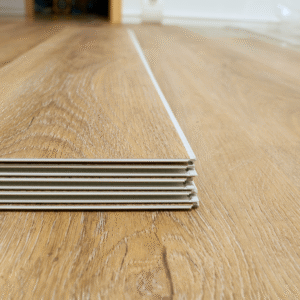
At Eagle County’s altitude, with its extreme humidity swings and frequent radiant heat systems, engineered wood flooring is the standard recommendation for commercial spaces. The cross-laminated construction resists the expansion and contraction that solid wood cannot handle in these conditions.
Thickness and Wear Layer Considerations
Commercial engineered floors need a thick wear layer that allows for future sanding and refinishing. A thin veneer may cost less initially but cannot be maintained over the 15 to 20-year lifespan a commercial floor should deliver.
Installation Method and Subfloor Requirements
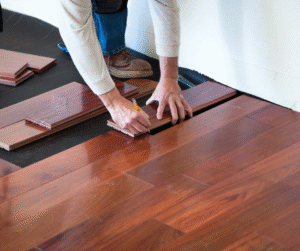
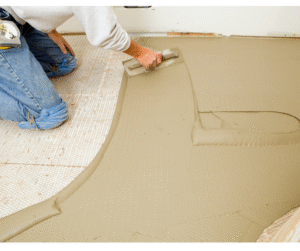
Commercial installations often use glue-down methods for stability and sound reduction. The subfloor preparation requirements are more stringent because the consequences of movement or moisture failure are amplified by the scale of the project.
Finish Selection for Commercial Durability
The finish on a commercial floor works harder than any other component. It must resist scuffing, chemicals, moisture, and UV degradation while remaining maintainable without full closure.
Commercial Grade Polyurethane
High-traffic commercial finishes are formulated differently than residential products. They offer higher abrasion resistance and can be recoated without full sanding, which allows maintenance during off-hours.
European Oil Finishes in Premium Spaces
Luxury hotels and high-end restaurants in Vail and Beaver Creek increasingly choose European oil finishes for their natural appearance. These finishes allow spot repair without refinishing the entire floor, which is a significant advantage in spaces that cannot close for maintenance.
UV Protection at Altitude
Eagle County’s elevation means 25 percent more UV exposure than sea level. Commercial floors in spaces with large windows need UV-protective finishes to prevent color change and finish degradation in sun-exposed areas.
Planning for Maintenance From Day One
A commercial floor’s long-term cost is determined not just by installation but by how it can be maintained over its lifespan.
Recoating Schedules
The best commercial floors are designed to be recoated periodically without full sanding. This extends the finish life and keeps the floor looking fresh without the disruption and expense of complete refinishing.
Spot Repair Capability
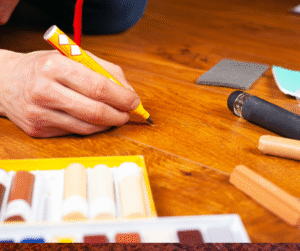
Damage will happen in commercial spaces. The ability to repair individual sections without visible patching depends on the species, stain, and finish chosen at installation. Planning for repairability at the design stage saves enormous cost later.
Invest in the Right Floor From the Start
Commercial hardwood flooring in Eagle County can deliver decades of beauty and performance, but only when it is specified correctly for the environment it will serve. A floor chosen for appearance alone will underperform. A floor chosen for durability, maintainability, and altitude performance will reward the investment for years.
If you are planning a commercial installation for a hotel, restaurant, or retail space in Eagle County, explore the full range of custom hardwood flooring options and discover how the right specification creates a floor that performs as well as it looks.